
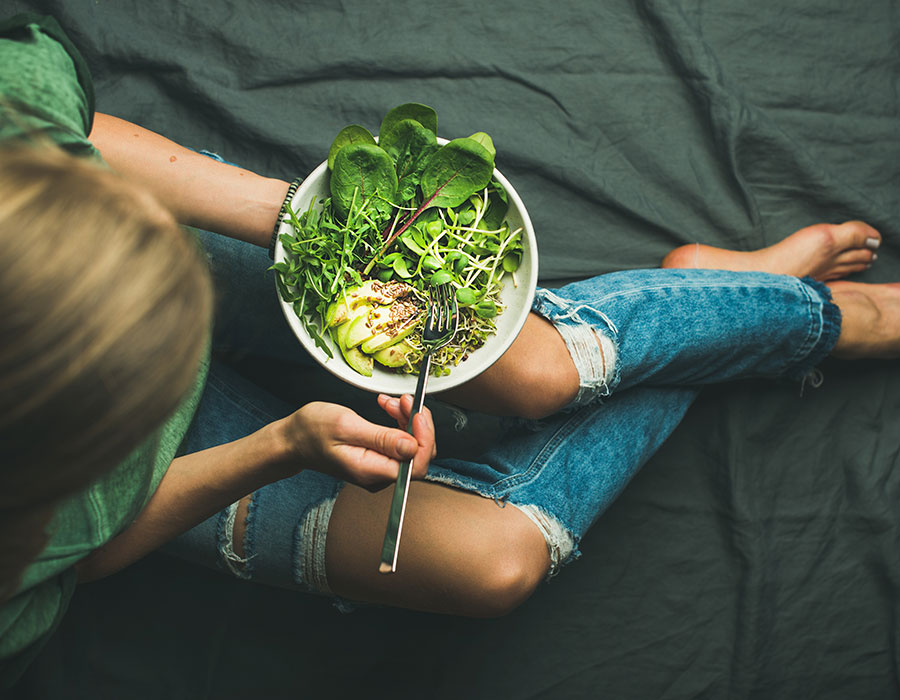
In general, no matter which diet you are following, it can be beneficial to your health to limit highly processed foods, foods high in saturated or trans fat, and choose foods with little to no added sugar, sodium, and to replace sugary drinks (such as sweetened tea, soft drinks etc.), with water.
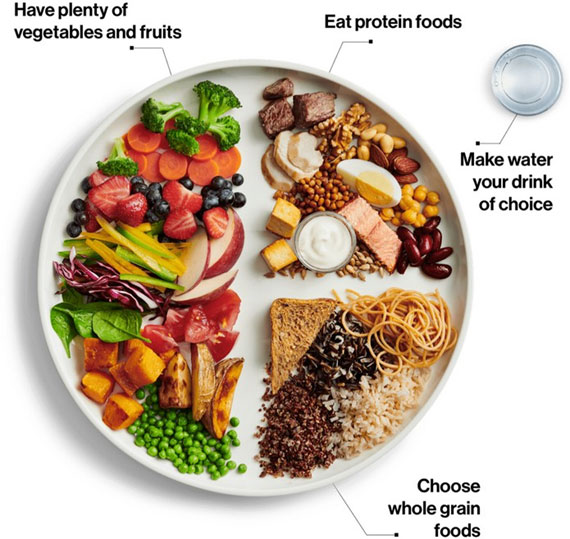
You should look to have a variety of foods on your plate – it would provide you with a lot less nutritional benefits if you were to fill half your plate with just potatoes to cover your veggie needs, or bananas to cover your fruit intake. You can look to the plate for some inspiration on foods you could include – the more colorful your plate, the better! (Picture by Canada’s food guide, 2022)
Different diets and their nutrient needs
Omnivore diet
Seen as omnivores do not exclude any food group from their diet, they normally do not need to worry about consuming sufficient amounts of nutrients, as long as they eat a variety of whole foods, in the rough proportions of the plate guide.
Vegetarian/ Vegan
As vegetarians and vegans exclude certain foods groups, they need to be conscious in their food choices. The stricter the diet, the more it requires planning in order to consume all the nutrients your body needs. Here are some nutrients that require special attention when following a vegetarian/vegan diet:
| Nutrient | Sources *All the foods listed under “sources” for vegans of course also apply to vegetarians. |
|---|---|
| Calcium | Vegan: Dark leafy greens, broccoli, legumes, nuts, fortified foods (such as soy milk, some brands of tofu)… Vegetarian: Dairy products (such as cheese, yogurt…) |
| Vitamin D | Vegan: Fortified products (plant-based milks, cereals, orange juice…), mushrooms, the sun Vegetarian: Fortified dairy products (i.e. milks, yogurt) |
| Iron | Vegan: Lentils (all colours), tofu, dark leafy greens, kidney beans, enriched foods, broccoli, flax seeds, almonds, dried fruits such as nuts, raisins… Vegetarian: Eggs Vitamin C helps your body absorb the iron from plant foods, so add some foods containing vitamin C to your meals to boost your intake! (i.e., peppers, citrus fruits…) |
| B12 | Vegan: Fortified products (i.e., certain cereals, nutritional yeast) Nutritional yeast (depending on brand) contains 5 mcg of vitamin B12 per tablespoon, which is slightly more than double the daily recommended amount for adults. Vegetarian: Dairy products, eggs |
| Zinc | Vegan: Beans, nuts, whole grains, fortified foods (i.e., cereals)… Vegetarian: some dairy products (i.e., yogurt, cheddar cheese…) |
| Omega-3 fatty acids | Vegetarian/Vegan: Chia and flax seed, walnuts, soy and canola oil… |
No matter which diet you follow, what makes a diet healthy is it being well-rounded and consisting mostly of whole foods (just because it’s vegan (take Oreos), that doesn’t make it more nutritious). Think of switching to a vegetarian/vegan diet as adding more whole plant foods to your diet, rather than missing out on animal products.